

Necrotic Enteritis in Poultry: How to Protect Gut Health and Performance
Necrotic enteritis (NE) is one of the most costly intestinal diseases in modern poultry production, particularly affecting broiler chickens between 2 and 5 weeks of age. Although the bacterium responsible, Clostridium perfringens, is naturally present in the gut, problems arise when gut balance is disturbed, allowing rapid bacterial growth and toxin production.
For poultry producers in emerging and developing markets, where performance margins are tight, prevention is essential. At Champrix Animal Nutrition, we believe that strong gut health is the foundation of profitable poultry production.
What Is Necrotic Enteritis?
Necrotic enteritis is a peracute or subclinical intestinal disease caused by toxins produced by Clostridium perfringens. Under stable gut conditions, this bacterium remains harmless. However, intestinal damage or nutritional imbalances can trigger explosive bacterial growth, leading to:
Destruction of the intestinal lining
Reduced nutrient absorption
Rapid performance losses
Sudden increases in mortality
In acute cases, birds may show severe depression and die quickly, often with few visible warning signs.
Recognizing the Symptoms of Necrotic Enteritis
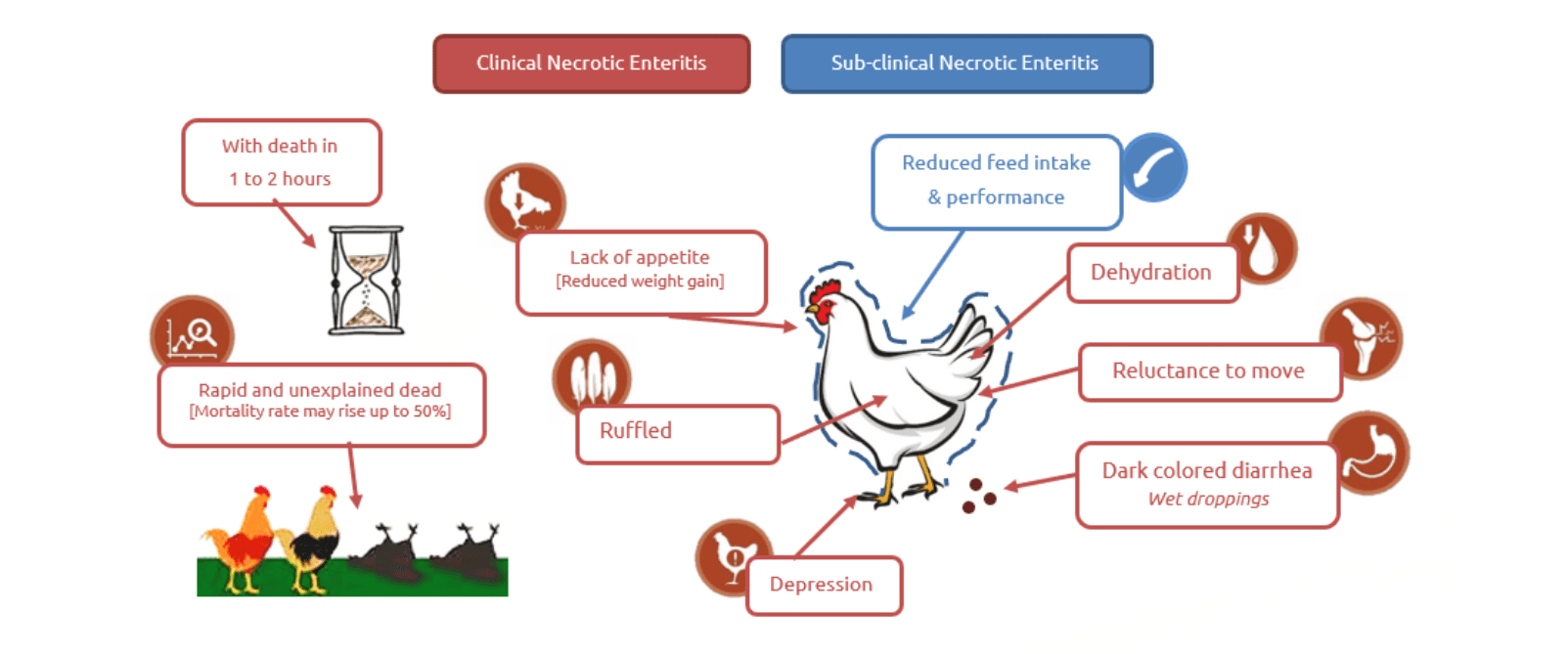
Clinical (Acute) Necrotic Enteritis
Sudden increase in flock mortality
Severe depression and reduced appetite
Dark, foul‑smelling diarrhea
Ruffled feathers and closed eyes
Post‑mortem examination often reveals:
Gas‑filled, fragile intestines
Foul‑smelling brown intestinal contents
Yellow or tan pseudomembranes lining the gut
Subclinical Necrotic Enteritis
Subclinical NE is much harder to detect but often more damaging economically:
Reduced growth rate
Poor feed conversion
Uneven flock performance
Lower final body weights
These hidden losses make prevention even more critical.
Key Predisposing Factors for Necrotic Enteritis
Necrotic enteritis is a multifactorial disease, most commonly triggered by:
Intestinal damage, especially from coccidiosis
Undigested protein reaching the hindgut
Wet litter and poor hygiene
Sudden feed changes
Stress and immune suppression
Anything that disrupts the gut environment increases the risk of Clostridium perfringens overgrowth.
Why Antibiotic‑Free Control Requires a New Strategy
Historically, necrotic enteritis was controlled using in‑feed antibiotics. Today, growing concerns around antibiotic resistance and regulatory restrictions mean poultry producers must adopt preventive, nutrition‑based solutions.
Effective control now focuses on:
Supporting gut integrity
Improving nutrient digestibility
Reducing substrates for harmful bacteria
Strengthening overall flock resilience
This shift aligns directly with Champrix’s philosophy of driving livestock development through smart nutrition and reliable guidance.
Practical Prevention Measures on Farm
An integrated prevention program should include:
Strong coccidiosis control, using rotation programs to limit resistance
Thorough cleaning and drying between flocks
Strict biosecurity to prevent cross‑contamination
Good litter management, keeping bedding dry
Avoiding sudden feed changes
Using highly digestible raw materials
Preventing excessively fine feed grinding
Sound management reduces intestinal stress and protects gut balance.
What Can Champrix Do to Reduce Necrotic Enteritis Risk?
As an animal nutrition specialist for emerging markets, Champrix Animal Nutrition delivers tailored feed strategies that support gut health and performance.
1. Smarter Protein Formulation
Champrix formulations focus on:
Lower crude protein levels, without compromising performance
Strategic use of synthetic amino acids
This approach reduces undigested protein in the gut, limiting growth substrates for Clostridium perfringens.
2. Champrix M‑Active Poultry
Champrix M‑Active Poultry is a blend of medium‑chain fatty acids developed as an alternative to antibiotic growth promoters. It:
Penetrates bacterial cell membranes
Helps reduce harmful bacterial pressure
Supports intestinal integrity and performance under NE challenge
3. NSP Enzyme Solutions
Common raw materials such as wheat and barley are high in non‑starch polysaccharides (NSPs), which:
Increase gut viscosity
Reduce nutrient digestibility
By adding NSP enzymes to Champrix premixes or concentrates, digestion improves and the risk of necrotic enteritis is reduced.
An Integrated Gut Health Approach Works Best
There is no single solution for necrotic enteritis. The most effective strategy combines:
Robust coccidiosis control
Sound nutrition and digestibility
Targeted feed additives
Consistent management practices
This gut‑health‑focused approach is essential for sustainable poultry production, especially in fast‑growing markets where reliability and performance matter most.
Did You Know?
Around 70% of poultry farmers worldwide face necrotic enteritis challenges
A single NE outbreak can cost approximately €0.05 per bird through mortality and performance loss
Prevention Is Always Better Than Cure
Necrotic enteritis does not just affect bird health, it directly impacts profitability, feed efficiency, and flock uniformity. With the right nutrition, management, and expert support, the disease can be effectively prevented.
Champrix Animal Nutrition stands alongside poultry producers, delivering reliable feed solutions and practical guidance that protect gut health and drive results.
Strengthen Poultry Gut Health with Champrix.
Necrotic enteritis (NE) is one of the most costly intestinal diseases in modern poultry production, particularly affecting broiler chickens between 2 and 5 weeks of age. Although the bacterium responsible, Clostridium perfringens, is naturally present in the gut, problems arise when gut balance is disturbed, allowing rapid bacterial growth and toxin production.
For poultry producers in emerging and developing markets, where performance margins are tight, prevention is essential. At Champrix Animal Nutrition, we believe that strong gut health is the foundation of profitable poultry production.
What Is Necrotic Enteritis?
Necrotic enteritis is a peracute or subclinical intestinal disease caused by toxins produced by Clostridium perfringens. Under stable gut conditions, this bacterium remains harmless. However, intestinal damage or nutritional imbalances can trigger explosive bacterial growth, leading to:
Destruction of the intestinal lining
Reduced nutrient absorption
Rapid performance losses
Sudden increases in mortality
In acute cases, birds may show severe depression and die quickly, often with few visible warning signs.
Recognizing the Symptoms of Necrotic Enteritis
Clinical (Acute) Necrotic Enteritis
Sudden increase in flock mortality
Severe depression and reduced appetite
Dark, foul‑smelling diarrhea
Ruffled feathers and closed eyes
Post‑mortem examination often reveals:
Gas‑filled, fragile intestines
Foul‑smelling brown intestinal contents
Yellow or tan pseudomembranes lining the gut
Subclinical Necrotic Enteritis
Subclinical NE is much harder to detect but often more damaging economically:
Reduced growth rate
Poor feed conversion
Uneven flock performance
Lower final body weights
These hidden losses make prevention even more critical.
Key Predisposing Factors for Necrotic Enteritis
Necrotic enteritis is a multifactorial disease, most commonly triggered by:
Intestinal damage, especially from coccidiosis
Undigested protein reaching the hindgut
Wet litter and poor hygiene
Sudden feed changes
Stress and immune suppression
Anything that disrupts the gut environment increases the risk of Clostridium perfringens overgrowth.
Why Antibiotic‑Free Control Requires a New Strategy
Historically, necrotic enteritis was controlled using in‑feed antibiotics. Today, growing concerns around antibiotic resistance and regulatory restrictions mean poultry producers must adopt preventive, nutrition‑based solutions.
Effective control now focuses on:
Supporting gut integrity
Improving nutrient digestibility
Reducing substrates for harmful bacteria
Strengthening overall flock resilience
This shift aligns directly with Champrix’s philosophy of driving livestock development through smart nutrition and reliable guidance.
Practical Prevention Measures on Farm
An integrated prevention program should include:
Strong coccidiosis control, using rotation programs to limit resistance
Thorough cleaning and drying between flocks
Strict biosecurity to prevent cross‑contamination
Good litter management, keeping bedding dry
Avoiding sudden feed changes
Using highly digestible raw materials
Preventing excessively fine feed grinding
Sound management reduces intestinal stress and protects gut balance.
What Can Champrix Do to Reduce Necrotic Enteritis Risk?
As an animal nutrition specialist for emerging markets, Champrix Animal Nutrition delivers tailored feed strategies that support gut health and performance.
1. Smarter Protein Formulation
Champrix formulations focus on:
Lower crude protein levels, without compromising performance
Strategic use of synthetic amino acids
This approach reduces undigested protein in the gut, limiting growth substrates for Clostridium perfringens.
2. Champrix M‑Active Poultry
Champrix M‑Active Poultry is a blend of medium‑chain fatty acids developed as an alternative to antibiotic growth promoters. It:
Penetrates bacterial cell membranes
Helps reduce harmful bacterial pressure
Supports intestinal integrity and performance under NE challenge
3. NSP Enzyme Solutions
Common raw materials such as wheat and barley are high in non‑starch polysaccharides (NSPs), which:
Increase gut viscosity
Reduce nutrient digestibility
By adding NSP enzymes to Champrix premixes or concentrates, digestion improves and the risk of necrotic enteritis is reduced.
An Integrated Gut Health Approach Works Best
There is no single solution for necrotic enteritis. The most effective strategy combines:
Robust coccidiosis control
Sound nutrition and digestibility
Targeted feed additives
Consistent management practices
This gut‑health‑focused approach is essential for sustainable poultry production, especially in fast‑growing markets where reliability and performance matter most.
Did You Know?
Around 70% of poultry farmers worldwide face necrotic enteritis challenges
A single NE outbreak can cost approximately €0.05 per bird through mortality and performance loss
Prevention Is Always Better Than Cure
Necrotic enteritis does not just affect bird health, it directly impacts profitability, feed efficiency, and flock uniformity. With the right nutrition, management, and expert support, the disease can be effectively prevented.
Champrix Animal Nutrition stands alongside poultry producers, delivering reliable feed solutions and practical guidance that protect gut health and drive results.
Strengthen Poultry Gut Health with Champrix.

Expertise that Empowers
At Champrix, we offer extensive practical knowledge across a wide range of feed solutions. We go beyond expertise and actively guide our partners through every step of their journey.
READ MORE
Expertise that Empowers
At Champrix, we offer extensive practical knowledge across a wide range of feed solutions. We go beyond expertise and actively guide our partners through every step of their journey.
READ MORE

Expertise that Empowers
At Champrix, we offer extensive practical knowledge across a wide range of feed solutions. We go beyond expertise and actively guide our partners through every step of their journey.
READ MORE
Expertise that Empowers
At Champrix, we offer extensive practical knowledge across a wide range of feed solutions. We go beyond expertise and actively guide our partners through every step of their journey.
READ MORE
Expertise that Empowers
At Champrix, we offer extensive practical knowledge across a wide range of feed solutions. We go beyond expertise and actively guide our partners through every step of their journey.
READ MORE
Expertise that Empowers
At Champrix, we offer extensive practical knowledge across a wide range of feed solutions. We go beyond expertise and actively guide our partners through every step of their journey.
READ MORE
Expertise that Empowers
At Champrix, we offer extensive practical knowledge across a wide range of feed solutions. We go beyond expertise and actively guide our partners through every step of their journey.
READ MORE
Expertise that Empowers
At Champrix, we offer extensive practical knowledge across a wide range of feed solutions. We go beyond expertise and actively guide our partners through every step of their journey.
READ MORE
Expertise that Empowers
At Champrix, we offer extensive practical knowledge across a wide range of feed solutions. We go beyond expertise and actively guide our partners through every step of their journey.
READ MORE
Expertise that Empowers
At Champrix, we offer extensive practical knowledge across a wide range of feed solutions. We go beyond expertise and actively guide our partners through every step of their journey.
READ MORE
Expertise that Empowers
At Champrix, we offer extensive practical knowledge across a wide range of feed solutions. We go beyond expertise and actively guide our partners through every step of their journey.
READ MORE
Expertise that Empowers
At Champrix, we offer extensive practical knowledge across a wide range of feed solutions. We go beyond expertise and actively guide our partners through every step of their journey.
READ MORE

Contact us
Stay Updated!
Subscribe to our mailings and be the first to hear about the latest research, innovations, and expert tips from Champrix.






Follow us
Stay Updated!
Subscribe to our mailings and be the first to hear about the latest research, innovations, and expert tips from Champrix.
Contact us
Stay Updated!
Subscribe to our mailings and be the first to hear about the latest research, innovations, and expert tips from Champrix.
Follow us