

Managing Fatty Liver Hemorrhagic Syndrome (FLHS) in Laying Hens: Prevention, Nutrition and Performance
Fatty Liver Hemorrhagic Syndrome (FLHS), often called fatty liver disease in laying hens, is one of the most common metabolic disorders affecting commercial layer flocks. It is characterized by the excessive accumulation of fat in the liver, and its presence can significantly impact the performance of laying hens. The condition reduces egg production, negatively impacts bird health, and can lead to sudden mortality, resulting in significant economic losses for poultry producers.
Fortunately, with the right nutrition, management practices, and feed solutions, FLHS can be prevented and managed effectively.
What is FLHS in Laying Hens?
The liver plays a critical role in egg production. It converts nutrients into the fats needed for egg yolk formation. During peak production, this process places a high metabolic demand on the liver.
When excessive fat accumulates in the liver, the organ becomes enlarged, fragile, and less efficient. In severe cases, liver hemorrhages can occur, leading to sudden death.
FLHS is particularly common in high performing laying hens and flocks exposed to nutritional or environmental stress.
What Causes Fatty Liver Disease in Layers?
Several factors contribute to the development of FLHS.
1. Imbalanced Nutrition
Diets containing excessive carbohydrates and insufficient fat sources can increase the liver's workload. The liver must convert surplus carbohydrates into fat, increasing the risk of fat accumulation.
Deficiencies in key nutrients involved in fat metabolism, such as choline and methionine, can also increase susceptibility.
2. Mycotoxin Contamination
Mycotoxins can damage liver tissue and impair liver function. Even low levels of contamination may affect flock performance over time.
3. Heat Stress
During periods of high temperatures, feed intake patterns change and metabolic stress increases. This can negatively affect liver health and increase the risk of FLHS.
4. Management and Health Challenges
Poor flock uniformity, inadequate housing conditions, and general health problems may contribute to metabolic disorders, including fatty liver disease.
Understanding these contributing factors is crucial for managing FLHS effectively.
Signs of FLHS in Laying Hens
Early detection allows for faster intervention and reduced production losses.
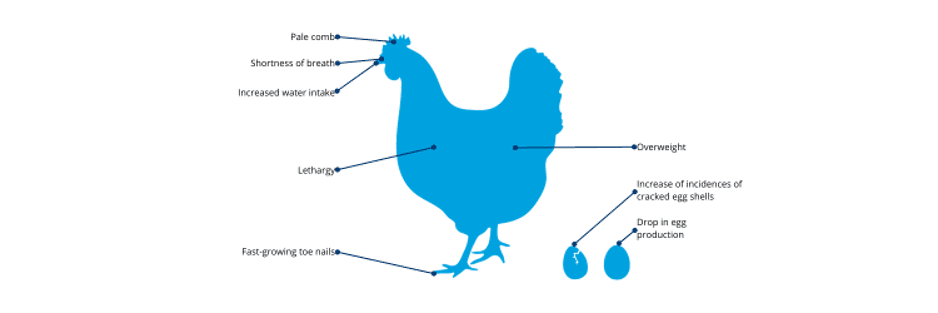
Common signs include:
Reduced egg production
Increased mortality
Pale combs and wattles
Overweight birds
Lethargy
Increased water consumption
Shortness of breath
Higher incidence of cracked eggs
Faster toenail growth
During post mortem examinations, affected livers are typically enlarged, yellowish, and fatty instead of the normal dark red appearance.

Early detection can make a significant difference in the outcome.
How to Prevent and Manage FLHS
Successful management requires a combination of nutritional support and sound farm management.
Support Liver Function Through Nutrition
Supplementation with lipotropic nutrients such as choline and methionine helps transport fat out of the liver and reduces fat accumulation.
A well formulated feeding program should also provide the correct balance between carbohydrates, fats, energy, vitamins, and trace minerals.
Optimize Feed Formulation
Reducing excess carbohydrates while maintaining energy levels through appropriate fat sources (vegetable oil) can decrease pressure on the liver.
High quality feed ingredients and balanced nutrient profiles are essential for maintaining liver health throughout the production cycle.
Control Mycotoxin Risks
Mycotoxins remain a major threat to liver health.
Including reliable toxin management strategies and high quality raw materials can help protect birds from hidden feed challenges that impact performance.
Reduce Heat Stress
Good ventilation, effective climate control, and adequate water availability help minimize stress and support overall metabolic health.
The Importance of High Quality Nutrition
Prevention is always more profitable than treatment. Nutrition is one of the most effective tools for preventing FLHS.
Feed is one of the most important factors determining the success of a laying flock. Hens require the correct balance of:
Energy
Protein
Essential amino acids
Vitamins
Minerals
Champrix offers high-quality poultry concentrates, premixes, and feed solutions designed to support gut health, digestion, growth, productivity, and flock performance.
Recommended Champrix Solutions for Layer Health
✅ Champrix Layer Concentrates
Support balanced amino acid intake and productive egg laying.
✅ Champrix Layer Premixes
Supply essential vitamins and minerals required for bird health, eggshell quality, and stress management.
✅ Champrix Poultry Nutrition Programs
Support healthy digestion, efficient nutrient utilization, and long-term flock productivity. Mycotoxin program, discover Champ-Tox.
Best Management Practices for FLHS Prevention
Preventing and addressing fatty liver disease hinges on proactive farm management practices. To keep your flock healthy:
Perform routine necropsies to identify issues early
Monitor egg production, feed intake, and water intake trends
Regularly assess bird condition and welfare
Use high quality premixes and concentrates
Implement a mycotoxin risk management program
Optimize housing conditions and ventilation
Minimize heat stress during warm periods
Protect Your Layer Performance with Champrix
Fatty Liver Hemorrhagic Syndrome can have a major impact on laying hen performance, but prevention is possible. A balanced feeding program, effective management, and the right nutritional support can help maintain liver health, improve productivity, and protect farm profitability.
Looking for practical solutions to improve layer performance and support liver health?
👉 Contact the Champrix team today to discuss the right premix, concentrate, feed additive, or toxin management solution for your poultry operation.
Fatty Liver Hemorrhagic Syndrome (FLHS), often called fatty liver disease in laying hens, is one of the most common metabolic disorders affecting commercial layer flocks. It is characterized by the excessive accumulation of fat in the liver, and its presence can significantly impact the performance of laying hens. The condition reduces egg production, negatively impacts bird health, and can lead to sudden mortality, resulting in significant economic losses for poultry producers.
Fortunately, with the right nutrition, management practices, and feed solutions, FLHS can be prevented and managed effectively.
What is FLHS in Laying Hens?
The liver plays a critical role in egg production. It converts nutrients into the fats needed for egg yolk formation. During peak production, this process places a high metabolic demand on the liver.
When excessive fat accumulates in the liver, the organ becomes enlarged, fragile, and less efficient. In severe cases, liver hemorrhages can occur, leading to sudden death.
FLHS is particularly common in high performing laying hens and flocks exposed to nutritional or environmental stress.
What Causes Fatty Liver Disease in Layers?
Several factors contribute to the development of FLHS.
1. Imbalanced Nutrition
Diets containing excessive carbohydrates and insufficient fat sources can increase the liver's workload. The liver must convert surplus carbohydrates into fat, increasing the risk of fat accumulation.
Deficiencies in key nutrients involved in fat metabolism, such as choline and methionine, can also increase susceptibility.
2. Mycotoxin Contamination
Mycotoxins can damage liver tissue and impair liver function. Even low levels of contamination may affect flock performance over time.
3. Heat Stress
During periods of high temperatures, feed intake patterns change and metabolic stress increases. This can negatively affect liver health and increase the risk of FLHS.
4. Management and Health Challenges
Poor flock uniformity, inadequate housing conditions, and general health problems may contribute to metabolic disorders, including fatty liver disease.
Understanding these contributing factors is crucial for managing FLHS effectively.
Signs of FLHS in Laying Hens
Early detection allows for faster intervention and reduced production losses.
Common signs include:
Reduced egg production
Increased mortality
Pale combs and wattles
Overweight birds
Lethargy
Increased water consumption
Shortness of breath
Higher incidence of cracked eggs
Faster toenail growth
During post mortem examinations, affected livers are typically enlarged, yellowish, and fatty instead of the normal dark red appearance.
Early detection can make a significant difference in the outcome.
How to Prevent and Manage FLHS
Successful management requires a combination of nutritional support and sound farm management.
Support Liver Function Through Nutrition
Supplementation with lipotropic nutrients such as choline and methionine helps transport fat out of the liver and reduces fat accumulation.
A well formulated feeding program should also provide the correct balance between carbohydrates, fats, energy, vitamins, and trace minerals.
Optimize Feed Formulation
Reducing excess carbohydrates while maintaining energy levels through appropriate fat sources (vegetable oil) can decrease pressure on the liver.
High quality feed ingredients and balanced nutrient profiles are essential for maintaining liver health throughout the production cycle.
Control Mycotoxin Risks
Mycotoxins remain a major threat to liver health.
Including reliable toxin management strategies and high quality raw materials can help protect birds from hidden feed challenges that impact performance.
Reduce Heat Stress
Good ventilation, effective climate control, and adequate water availability help minimize stress and support overall metabolic health.
The Importance of High Quality Nutrition
Prevention is always more profitable than treatment. Nutrition is one of the most effective tools for preventing FLHS.
Feed is one of the most important factors determining the success of a laying flock. Hens require the correct balance of:
Energy
Protein
Essential amino acids
Vitamins
Minerals
Champrix offers high-quality poultry concentrates, premixes, and feed solutions designed to support gut health, digestion, growth, productivity, and flock performance.
Recommended Champrix Solutions for Layer Health
✅ Champrix Layer Concentrates
Support balanced amino acid intake and productive egg laying.
✅ Champrix Layer Premixes
Supply essential vitamins and minerals required for bird health, eggshell quality, and stress management.
✅ Champrix Poultry Nutrition Programs
Support healthy digestion, efficient nutrient utilization, and long-term flock productivity. Mycotoxin program, discover Champ-Tox.
Best Management Practices for FLHS Prevention
Preventing and addressing fatty liver disease hinges on proactive farm management practices. To keep your flock healthy:
Perform routine necropsies to identify issues early
Monitor egg production, feed intake, and water intake trends
Regularly assess bird condition and welfare
Use high quality premixes and concentrates
Implement a mycotoxin risk management program
Optimize housing conditions and ventilation
Minimize heat stress during warm periods
Protect Your Layer Performance with Champrix
Fatty Liver Hemorrhagic Syndrome can have a major impact on laying hen performance, but prevention is possible. A balanced feeding program, effective management, and the right nutritional support can help maintain liver health, improve productivity, and protect farm profitability.
Looking for practical solutions to improve layer performance and support liver health?
👉 Contact the Champrix team today to discuss the right premix, concentrate, feed additive, or toxin management solution for your poultry operation.

Expertise that Empowers
At Champrix, we offer extensive practical knowledge across a wide range of feed solutions. We go beyond expertise and actively guide our partners through every step of their journey.
READ MORE
Expertise that Empowers
At Champrix, we offer extensive practical knowledge across a wide range of feed solutions. We go beyond expertise and actively guide our partners through every step of their journey.
READ MORE

Expertise that Empowers
At Champrix, we offer extensive practical knowledge across a wide range of feed solutions. We go beyond expertise and actively guide our partners through every step of their journey.
READ MORE
Expertise that Empowers
At Champrix, we offer extensive practical knowledge across a wide range of feed solutions. We go beyond expertise and actively guide our partners through every step of their journey.
READ MORE
Expertise that Empowers
At Champrix, we offer extensive practical knowledge across a wide range of feed solutions. We go beyond expertise and actively guide our partners through every step of their journey.
READ MORE
Expertise that Empowers
At Champrix, we offer extensive practical knowledge across a wide range of feed solutions. We go beyond expertise and actively guide our partners through every step of their journey.
READ MORE
Expertise that Empowers
At Champrix, we offer extensive practical knowledge across a wide range of feed solutions. We go beyond expertise and actively guide our partners through every step of their journey.
READ MORE
Expertise that Empowers
At Champrix, we offer extensive practical knowledge across a wide range of feed solutions. We go beyond expertise and actively guide our partners through every step of their journey.
READ MORE
Expertise that Empowers
At Champrix, we offer extensive practical knowledge across a wide range of feed solutions. We go beyond expertise and actively guide our partners through every step of their journey.
READ MORE
Expertise that Empowers
At Champrix, we offer extensive practical knowledge across a wide range of feed solutions. We go beyond expertise and actively guide our partners through every step of their journey.
READ MORE
Expertise that Empowers
At Champrix, we offer extensive practical knowledge across a wide range of feed solutions. We go beyond expertise and actively guide our partners through every step of their journey.
READ MORE
Expertise that Empowers
At Champrix, we offer extensive practical knowledge across a wide range of feed solutions. We go beyond expertise and actively guide our partners through every step of their journey.
READ MORE

Contact us
Stay Updated!
Subscribe to our mailings and be the first to hear about the latest research, innovations, and expert tips from Champrix.






Follow us
Stay Updated!
Subscribe to our mailings and be the first to hear about the latest research, innovations, and expert tips from Champrix.
Contact us
Stay Updated!
Subscribe to our mailings and be the first to hear about the latest research, innovations, and expert tips from Champrix.
Follow us