

The Importance of Particle Size in Broiler Diets: A Key Factor for Better Performance
Feed formulation is about more than selecting the right ingredients. The way ingredients are processed can have a major impact on broiler performance. One of the most important, yet often overlooked, factors is particle size.
Whether your feed is based on maize, wheat, soy, or other raw materials, the size and uniformity of feed particles directly influence feed intake, digestion, gut health, and growth performance. Understanding the role of particle size can help poultry producers and feed manufacturers optimize feed efficiency and achieve better production results.
Why Particle Size Matters in Broiler Nutrition
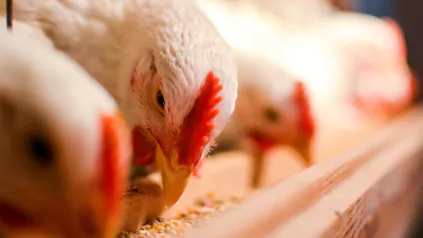
Unlike mammals, chickens cannot chew their feed. Instead, they rely on a strong muscular organ called the gizzard, which grinds feed particles before digestion. The effectiveness of this process depends largely on the particle size of the feed.
When feed particles are too large or inconsistent in size, broilers may selectively consume certain ingredients while leaving others behind. This is especially common in mash feeds, where birds often prefer maize particles over less palatable ingredients. As a result, nutrient intake becomes unbalanced, which can negatively affect growth and feed conversion.
The size of feed particles directly affects:
Feed intake
Nutrient digestion
Gut development
Growth performance
Feed conversion ratio (FCR)
Overall bird health
Uniform particle size helps ensure that every bite contains the intended nutritional composition, supporting consistent flock performance.
The Problem with Particles That Are Too Coarse
When mash feed contains particles that are too large or inconsistent in size, broilers tend to select their favorite ingredients. Birds often consume more maize while leaving behind other nutrient-rich ingredients.
This selective feeding can lead to:
Nutrient imbalances
Reduced growth rates
Uneven flock performance
Increased feed wastage
For this reason, maintaining a uniform particle distribution is just as important as selecting the correct average particle size.
How to Check Feed Uniformity
For mash feed:
Take a sample and visually assess whether particles are similar in size.
For pellets:
Place pellets in water inside a transparent container.
Allow them to dissolve for approximately 30 minutes.
Observe whether coarse and fine particles separate into distinct layers.
A uniform feed structure supports consistent nutrient intake across the flock.
Fine Grinding: Benefits and Challenges
Finely ground feed offers several advantages, particularly during the first stages of a broiler's life.
Young chicks have a relatively underdeveloped digestive system and can more easily consume and digest smaller feed particles. Fine particles also increase the surface area available for digestive enzymes, potentially improving nutrient utilization.
Finely ground feed offers several advantages:
Easier feed consumption for newly hatched chicks
Improved enzyme access to nutrients
Better nutrient digestion and absorption
Enhanced early growth performance
When Feed Becomes Too Fine
Although fine grinding brings benefits, feed that is excessively fine can cause several challenges:
Reduced gizzard development
Faster passage of feed through the digestive tract
Increased risk of wet litter and digestive disorders
Greater susceptibility to coccidiosis
An underdeveloped gizzard limits the bird's natural ability to process feed efficiently, potentially impacting long-term performance. Finding the right balance is therefore essential.
Why Coarser Particles Improve Gut Health
As broilers grow, slightly coarser particles can provide important benefits.
Larger particles stimulate gizzard activity, leading to improved feed grinding and longer retention time in the digestive tract. This gives nutrients more time to be digested and absorbed.
Coarser particles can contribute to:
Better gizzard development
Improved gut health
Enhanced nutrient absorption
A more stable intestinal microbiota
Better resistance against harmful pathogens
The challenge is avoiding particles that are so large that birds begin sorting feed or struggle with intake.
What Is the Optimal Particle Size for Broilers?
The ideal particle size changes as broilers age.
Young chicks generally perform best on finer particles that are easy to consume and digest. As the digestive system matures, feed can gradually become coarser to stimulate gizzard function and support gut health.
For broiler diets based on maize or sorghum, an optimal particle size typically falls between 600 and 900 μm (geometric mean diameter). Equally important is maintaining a consistent particle size distribution throughout the feed.
How Feed Quality and Nutrition Work Together
Particle size is just one element of successful broiler nutrition. To achieve maximum performance, feed structure must be combined with precise nutritional formulation and high quality ingredients.
Champrix supports poultry producers and feed manufacturers with a range of nutritional solutions, including:
Champrix premixes for balanced vitamin and mineral nutrition
Champrix concentrates to optimize feed formulation efficiency
Feed additives that support gut health, nutrient utilization, and overall performance
Specialized poultry nutrition programs tailored to different production stages
When feed structure and nutrition are properly aligned, broilers can achieve better growth, improved feed conversion, and stronger overall performance.
Final Thoughts
Particle size may seem like a small detail, but its impact on broiler performance is significant. Particle size plays a critical role in broiler nutrition. Feed that is too coarse or too fine can negatively impact digestion, gut development, and production results. Also, it is always important that the particle size is uniform in order to avoid selection and to obtain optimal production. By maintaining a consistent particle size and adapting feed structure to the age of the birds, producers can support optimal growth and flock health.
Combined with high quality nutritional solutions from Champrix, the right feed structure helps unlock the full genetic potential of modern broilers.
Ready to optimize your broiler feed?
Looking to improve feed efficiency, gut health, or broiler performance?
Contact Champrix today to discover how our premixes, concentrates, and feed additives can help you achieve better results.
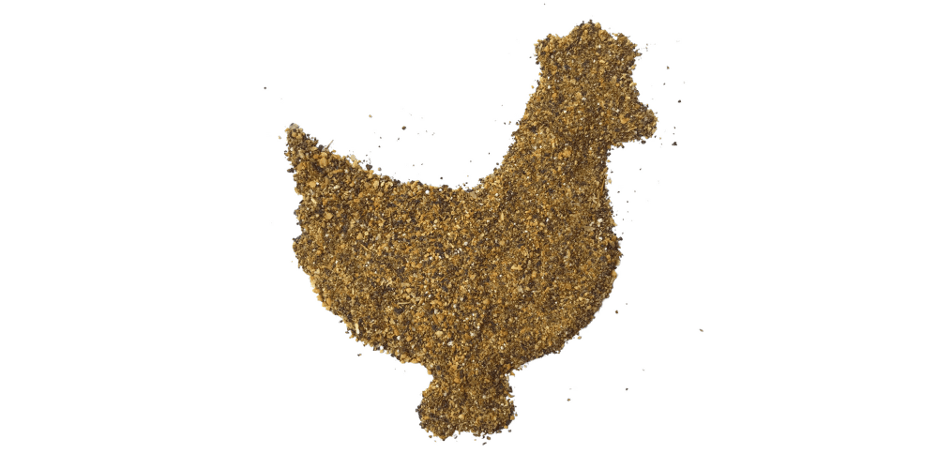
Feed formulation is about more than selecting the right ingredients. The way ingredients are processed can have a major impact on broiler performance. One of the most important, yet often overlooked, factors is particle size.
Whether your feed is based on maize, wheat, soy, or other raw materials, the size and uniformity of feed particles directly influence feed intake, digestion, gut health, and growth performance. Understanding the role of particle size can help poultry producers and feed manufacturers optimize feed efficiency and achieve better production results.
Why Particle Size Matters in Broiler Nutrition
Unlike mammals, chickens cannot chew their feed. Instead, they rely on a strong muscular organ called the gizzard, which grinds feed particles before digestion. The effectiveness of this process depends largely on the particle size of the feed.
When feed particles are too large or inconsistent in size, broilers may selectively consume certain ingredients while leaving others behind. This is especially common in mash feeds, where birds often prefer maize particles over less palatable ingredients. As a result, nutrient intake becomes unbalanced, which can negatively affect growth and feed conversion.
The size of feed particles directly affects:
Feed intake
Nutrient digestion
Gut development
Growth performance
Feed conversion ratio (FCR)
Overall bird health
Uniform particle size helps ensure that every bite contains the intended nutritional composition, supporting consistent flock performance.
The Problem with Particles That Are Too Coarse
When mash feed contains particles that are too large or inconsistent in size, broilers tend to select their favorite ingredients. Birds often consume more maize while leaving behind other nutrient-rich ingredients.
This selective feeding can lead to:
Nutrient imbalances
Reduced growth rates
Uneven flock performance
Increased feed wastage
For this reason, maintaining a uniform particle distribution is just as important as selecting the correct average particle size.
How to Check Feed Uniformity
For mash feed:
Take a sample and visually assess whether particles are similar in size.
For pellets:
Place pellets in water inside a transparent container.
Allow them to dissolve for approximately 30 minutes.
Observe whether coarse and fine particles separate into distinct layers.
A uniform feed structure supports consistent nutrient intake across the flock.
Fine Grinding: Benefits and Challenges
Finely ground feed offers several advantages, particularly during the first stages of a broiler's life.
Young chicks have a relatively underdeveloped digestive system and can more easily consume and digest smaller feed particles. Fine particles also increase the surface area available for digestive enzymes, potentially improving nutrient utilization.
Finely ground feed offers several advantages:
Easier feed consumption for newly hatched chicks
Improved enzyme access to nutrients
Better nutrient digestion and absorption
Enhanced early growth performance
When Feed Becomes Too Fine
Although fine grinding brings benefits, feed that is excessively fine can cause several challenges:
Reduced gizzard development
Faster passage of feed through the digestive tract
Increased risk of wet litter and digestive disorders
Greater susceptibility to coccidiosis
An underdeveloped gizzard limits the bird's natural ability to process feed efficiently, potentially impacting long-term performance. Finding the right balance is therefore essential.
Why Coarser Particles Improve Gut Health
As broilers grow, slightly coarser particles can provide important benefits.
Larger particles stimulate gizzard activity, leading to improved feed grinding and longer retention time in the digestive tract. This gives nutrients more time to be digested and absorbed.
Coarser particles can contribute to:
Better gizzard development
Improved gut health
Enhanced nutrient absorption
A more stable intestinal microbiota
Better resistance against harmful pathogens
The challenge is avoiding particles that are so large that birds begin sorting feed or struggle with intake.
What Is the Optimal Particle Size for Broilers?
The ideal particle size changes as broilers age.
Young chicks generally perform best on finer particles that are easy to consume and digest. As the digestive system matures, feed can gradually become coarser to stimulate gizzard function and support gut health.
For broiler diets based on maize or sorghum, an optimal particle size typically falls between 600 and 900 μm (geometric mean diameter). Equally important is maintaining a consistent particle size distribution throughout the feed.
How Feed Quality and Nutrition Work Together
Particle size is just one element of successful broiler nutrition. To achieve maximum performance, feed structure must be combined with precise nutritional formulation and high quality ingredients.
Champrix supports poultry producers and feed manufacturers with a range of nutritional solutions, including:
Champrix premixes for balanced vitamin and mineral nutrition
Champrix concentrates to optimize feed formulation efficiency
Feed additives that support gut health, nutrient utilization, and overall performance
Specialized poultry nutrition programs tailored to different production stages
When feed structure and nutrition are properly aligned, broilers can achieve better growth, improved feed conversion, and stronger overall performance.
Final Thoughts
Particle size may seem like a small detail, but its impact on broiler performance is significant. Particle size plays a critical role in broiler nutrition. Feed that is too coarse or too fine can negatively impact digestion, gut development, and production results. Also, it is always important that the particle size is uniform in order to avoid selection and to obtain optimal production. By maintaining a consistent particle size and adapting feed structure to the age of the birds, producers can support optimal growth and flock health.
Combined with high quality nutritional solutions from Champrix, the right feed structure helps unlock the full genetic potential of modern broilers.
Ready to optimize your broiler feed?
Looking to improve feed efficiency, gut health, or broiler performance?
Contact Champrix today to discover how our premixes, concentrates, and feed additives can help you achieve better results.

Expertise that Empowers
At Champrix, we offer extensive practical knowledge across a wide range of feed solutions. We go beyond expertise and actively guide our partners through every step of their journey.
READ MORE
Expertise that Empowers
At Champrix, we offer extensive practical knowledge across a wide range of feed solutions. We go beyond expertise and actively guide our partners through every step of their journey.
READ MORE

Expertise that Empowers
At Champrix, we offer extensive practical knowledge across a wide range of feed solutions. We go beyond expertise and actively guide our partners through every step of their journey.
READ MORE
Expertise that Empowers
At Champrix, we offer extensive practical knowledge across a wide range of feed solutions. We go beyond expertise and actively guide our partners through every step of their journey.
READ MORE
Expertise that Empowers
At Champrix, we offer extensive practical knowledge across a wide range of feed solutions. We go beyond expertise and actively guide our partners through every step of their journey.
READ MORE
Expertise that Empowers
At Champrix, we offer extensive practical knowledge across a wide range of feed solutions. We go beyond expertise and actively guide our partners through every step of their journey.
READ MORE
Expertise that Empowers
At Champrix, we offer extensive practical knowledge across a wide range of feed solutions. We go beyond expertise and actively guide our partners through every step of their journey.
READ MORE
Expertise that Empowers
At Champrix, we offer extensive practical knowledge across a wide range of feed solutions. We go beyond expertise and actively guide our partners through every step of their journey.
READ MORE
Expertise that Empowers
At Champrix, we offer extensive practical knowledge across a wide range of feed solutions. We go beyond expertise and actively guide our partners through every step of their journey.
READ MORE
Expertise that Empowers
At Champrix, we offer extensive practical knowledge across a wide range of feed solutions. We go beyond expertise and actively guide our partners through every step of their journey.
READ MORE
Expertise that Empowers
At Champrix, we offer extensive practical knowledge across a wide range of feed solutions. We go beyond expertise and actively guide our partners through every step of their journey.
READ MORE
Expertise that Empowers
At Champrix, we offer extensive practical knowledge across a wide range of feed solutions. We go beyond expertise and actively guide our partners through every step of their journey.
READ MORE

Contact us
Stay Updated!
Subscribe to our mailings and be the first to hear about the latest research, innovations, and expert tips from Champrix.






Follow us
Stay Updated!
Subscribe to our mailings and be the first to hear about the latest research, innovations, and expert tips from Champrix.
Contact us
Stay Updated!
Subscribe to our mailings and be the first to hear about the latest research, innovations, and expert tips from Champrix.
Follow us