

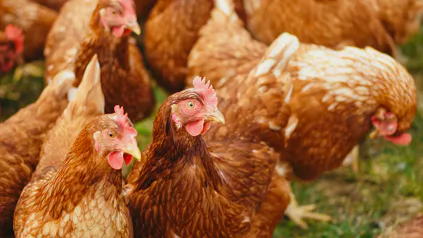
Feather Pecking in Laying Hens: 7 Practical Tips to Prevent Losses and Improve Welfare
Feather pecking is one of the most common and costly challenges in laying hen farming. What often starts as a few birds pulling feathers can quickly develop into a serious welfare issue, leading to cannibalism, reduced egg production, poor feed conversion, and increased mortality.
For poultry farmers across Africa and other emerging markets, preventing feather pecking is essential for maintaining flock performance and profitability. The good news? With the right nutrition, management, and housing practices, feather pecking can be significantly reduced.
In this article, our poultry specialists share 7 practical strategies to help you control feather pecking and keep your flock healthy and productive.
What Is Feather Pecking?
Feather pecking occurs when hens repeatedly peck and pull feathers from other birds. Unlike normal exploratory pecking behavior, feather pecking causes feather loss, stress, skin damage, and can escalate into cannibalism.
The first signs are often:
Missing feathers around the tail area
Bushy or damaged tail feathers
Visible down feathers
Nervous or stressed birds
Early detection is crucial because once the behavior spreads through the flock, it becomes much harder to stop.
Why Is Feather Pecking a Problem?
Feather loss affects both bird welfare and farm profitability.
Birds with damaged plumage must use more energy to maintain body temperature, resulting in:
Higher feed consumption
Poorer feed conversion
Increased stress
Greater risk of disease
Reduced productivity
Increased mortality due to cannibalism
Because feather pecking has many potential causes, a complete management approach is required.
1. Provide Fibre-Rich Feed
Nutrition plays a major role in feather pecking prevention.
Research shows that birds often consume feathers because it slows the passage of feed through the digestive system, creating a feeling of satiety. Dietary fibre can provide the same benefit while supporting gut health.
Practical recommendations:
Include adequate fibre levels in the diet.
Offer roughage such as alfalfa hay.
Encourage natural foraging behavior.
Using 123FEED.com, poultry farmers can create cost-effective feed formulations based on locally available raw materials and current ingredient prices. This helps ensure the correct balance of fibre and nutrients for optimal flock performance.
Farmer Tip: Birds that spend more time searching and eating fibre-rich materials spend less time pecking other birds.
2. Feed the Right Amino Acid Levels
Protein quality is just as important as protein quantity.
Deficiencies in essential amino acids can increase feather pecking and cannibalism because birds instinctively seek alternative protein sources.
To support feather development and maintain productivity:
Use high-quality feed ingredients.
Balance amino acid levels correctly.
Monitor bird performance regularly.
Champrix Solution
Champrix Layer Concentrate 20% helps farmers provide a balanced diet with the essential amino acids laying hens need for strong feather cover, optimal egg production, and consistent performance.
Combined with ration calculations through 123FEED.com, farmers can formulate accurate diets while controlling feed costs.
3. Manage Light Intensity Effectively
Lighting has a direct impact on bird behavior.
Excessively bright environments can increase activity and aggression, leading to more feather pecking.
Recommended actions:
Reduce light intensity where appropriate.
Use red light or red light filters.
Replace damaged lamps immediately.
Eliminate bright spots on floors and walls.
Red lighting can help reduce birds' ability to detect blood, lowering the risk of aggressive pecking and cannibalism.
4. Improve Ventilation and Reduce Heat Stress
Poor air quality and heat stress are significant triggers of feather pecking.
Warm, humid poultry houses create stress that negatively influences bird behavior.
Good ventilation helps:
Lower temperature
Reduce humidity
Remove ammonia
Improve air quality
Reduce stress levels
Champrix Solution
In hot climates, Champrix Heat Champ can help reduce the negative effects of heat stress and support birds during challenging environmental conditions.
Healthier birds are calmer birds, making feather pecking less likely to develop.
5. Reduce Competition Within the Flock
Competition for resources creates stress.
When birds struggle to access feed, water, nest boxes, or resting areas, aggressive behavior often increases.
Ensure sufficient:
Feeding space
Drinking space
Nest boxes
Perches
Resting areas
Champrix Solution
Providing enrichment materials such as Champrix Pecking Blocks keeps birds occupied and encourages natural pecking behavior away from flock mates.
Pecking blocks combined with roughage can significantly improve flock welfare and reduce harmful behaviors.
6. Reduce Group Size Where Possible
Hens establish social hierarchies through pecking behavior.
In large groups, birds encounter unfamiliar individuals more frequently, resulting in repeated social conflicts and increased pecking activity.
Smaller flock groups can help:
Reduce stress
Stabilize hierarchy
Improve bird welfare
Lower feather damage
While reducing flock size is not always possible, dividing large groups into manageable sections can help.
7. Maintain Strong Biosecurity and Hygiene
External parasites, diseases, lice, and mites create discomfort that encourages feather pecking.
A strong biosecurity program should include:
Regular flock inspection
Thorough cleaning procedures
Parasite monitoring
Pest control
Controlled farm access
Healthy birds experience less stress and are less likely to develop damaging behaviors.
A Good Start Is Half the Battle
Feather pecking rarely has a single cause. Success comes from combining good nutrition, proper housing, flock management, biosecurity, and stress reduction strategies.
The earlier signs are recognized, the easier it is to prevent serious outbreaks and economic losses.
By providing balanced nutrition, managing environmental conditions, and using practical enrichment tools, farmers can protect both bird welfare and profitability.
Why More Poultry Farmers Choose Champrix
At Champrix, we support poultry farmers with practical nutrition solutions designed for local conditions and emerging markets.
Our portfolio includes:
✅ Champrix Layer Concentrate 20% for balanced layer nutrition
✅ Heat Champ to support birds during heat stress
✅ Champrix Pecking Blocks for enrichment and behavioral management
✅ 123FEED.com for affordable feed formulation using local ingredients
Together, these solutions help farmers build healthier flocks, improve performance, and maximize profitability.
Ready to Improve Your Flock Performance?
Looking for practical solutions to reduce feather pecking and improve egg production?
Contact your local Champrix distributor today or visit Champrix products page of 123FEED.com to discover how Champrix products and 123FEED.com can help you formulate better feeds, improve bird welfare, and achieve stronger results on your poultry farm.
Feather pecking is one of the most common and costly challenges in laying hen farming. What often starts as a few birds pulling feathers can quickly develop into a serious welfare issue, leading to cannibalism, reduced egg production, poor feed conversion, and increased mortality.
For poultry farmers across Africa and other emerging markets, preventing feather pecking is essential for maintaining flock performance and profitability. The good news? With the right nutrition, management, and housing practices, feather pecking can be significantly reduced.
In this article, our poultry specialists share 7 practical strategies to help you control feather pecking and keep your flock healthy and productive.
What Is Feather Pecking?
Feather pecking occurs when hens repeatedly peck and pull feathers from other birds. Unlike normal exploratory pecking behavior, feather pecking causes feather loss, stress, skin damage, and can escalate into cannibalism.
The first signs are often:
Missing feathers around the tail area
Bushy or damaged tail feathers
Visible down feathers
Nervous or stressed birds
Early detection is crucial because once the behavior spreads through the flock, it becomes much harder to stop.
Why Is Feather Pecking a Problem?
Feather loss affects both bird welfare and farm profitability.
Birds with damaged plumage must use more energy to maintain body temperature, resulting in:
Higher feed consumption
Poorer feed conversion
Increased stress
Greater risk of disease
Reduced productivity
Increased mortality due to cannibalism
Because feather pecking has many potential causes, a complete management approach is required.
1. Provide Fibre-Rich Feed
Nutrition plays a major role in feather pecking prevention.
Research shows that birds often consume feathers because it slows the passage of feed through the digestive system, creating a feeling of satiety. Dietary fibre can provide the same benefit while supporting gut health.
Practical recommendations:
Include adequate fibre levels in the diet.
Offer roughage such as alfalfa hay.
Encourage natural foraging behavior.
Using 123FEED.com, poultry farmers can create cost-effective feed formulations based on locally available raw materials and current ingredient prices. This helps ensure the correct balance of fibre and nutrients for optimal flock performance.
Farmer Tip: Birds that spend more time searching and eating fibre-rich materials spend less time pecking other birds.
2. Feed the Right Amino Acid Levels
Protein quality is just as important as protein quantity.
Deficiencies in essential amino acids can increase feather pecking and cannibalism because birds instinctively seek alternative protein sources.
To support feather development and maintain productivity:
Use high-quality feed ingredients.
Balance amino acid levels correctly.
Monitor bird performance regularly.
Champrix Solution
Champrix Layer Concentrate 20% helps farmers provide a balanced diet with the essential amino acids laying hens need for strong feather cover, optimal egg production, and consistent performance.
Combined with ration calculations through 123FEED.com, farmers can formulate accurate diets while controlling feed costs.
3. Manage Light Intensity Effectively
Lighting has a direct impact on bird behavior.
Excessively bright environments can increase activity and aggression, leading to more feather pecking.
Recommended actions:
Reduce light intensity where appropriate.
Use red light or red light filters.
Replace damaged lamps immediately.
Eliminate bright spots on floors and walls.
Red lighting can help reduce birds' ability to detect blood, lowering the risk of aggressive pecking and cannibalism.
4. Improve Ventilation and Reduce Heat Stress
Poor air quality and heat stress are significant triggers of feather pecking.
Warm, humid poultry houses create stress that negatively influences bird behavior.
Good ventilation helps:
Lower temperature
Reduce humidity
Remove ammonia
Improve air quality
Reduce stress levels
Champrix Solution
In hot climates, Champrix Heat Champ can help reduce the negative effects of heat stress and support birds during challenging environmental conditions.
Healthier birds are calmer birds, making feather pecking less likely to develop.
5. Reduce Competition Within the Flock
Competition for resources creates stress.
When birds struggle to access feed, water, nest boxes, or resting areas, aggressive behavior often increases.
Ensure sufficient:
Feeding space
Drinking space
Nest boxes
Perches
Resting areas
Champrix Solution
Providing enrichment materials such as Champrix Pecking Blocks keeps birds occupied and encourages natural pecking behavior away from flock mates.
Pecking blocks combined with roughage can significantly improve flock welfare and reduce harmful behaviors.
6. Reduce Group Size Where Possible
Hens establish social hierarchies through pecking behavior.
In large groups, birds encounter unfamiliar individuals more frequently, resulting in repeated social conflicts and increased pecking activity.
Smaller flock groups can help:
Reduce stress
Stabilize hierarchy
Improve bird welfare
Lower feather damage
While reducing flock size is not always possible, dividing large groups into manageable sections can help.
7. Maintain Strong Biosecurity and Hygiene
External parasites, diseases, lice, and mites create discomfort that encourages feather pecking.
A strong biosecurity program should include:
Regular flock inspection
Thorough cleaning procedures
Parasite monitoring
Pest control
Controlled farm access
Healthy birds experience less stress and are less likely to develop damaging behaviors.
A Good Start Is Half the Battle
Feather pecking rarely has a single cause. Success comes from combining good nutrition, proper housing, flock management, biosecurity, and stress reduction strategies.
The earlier signs are recognized, the easier it is to prevent serious outbreaks and economic losses.
By providing balanced nutrition, managing environmental conditions, and using practical enrichment tools, farmers can protect both bird welfare and profitability.
Why More Poultry Farmers Choose Champrix
At Champrix, we support poultry farmers with practical nutrition solutions designed for local conditions and emerging markets.
Our portfolio includes:
✅ Champrix Layer Concentrate 20% for balanced layer nutrition
✅ Heat Champ to support birds during heat stress
✅ Champrix Pecking Blocks for enrichment and behavioral management
✅ 123FEED.com for affordable feed formulation using local ingredients
Together, these solutions help farmers build healthier flocks, improve performance, and maximize profitability.
Ready to Improve Your Flock Performance?
Looking for practical solutions to reduce feather pecking and improve egg production?
Contact your local Champrix distributor today or visit Champrix products page of 123FEED.com to discover how Champrix products and 123FEED.com can help you formulate better feeds, improve bird welfare, and achieve stronger results on your poultry farm.

Expertise that Empowers
At Champrix, we offer extensive practical knowledge across a wide range of feed solutions. We go beyond expertise and actively guide our partners through every step of their journey.
READ MORE
Expertise that Empowers
At Champrix, we offer extensive practical knowledge across a wide range of feed solutions. We go beyond expertise and actively guide our partners through every step of their journey.
READ MORE

Expertise that Empowers
At Champrix, we offer extensive practical knowledge across a wide range of feed solutions. We go beyond expertise and actively guide our partners through every step of their journey.
READ MORE
Expertise that Empowers
At Champrix, we offer extensive practical knowledge across a wide range of feed solutions. We go beyond expertise and actively guide our partners through every step of their journey.
READ MORE
Expertise that Empowers
At Champrix, we offer extensive practical knowledge across a wide range of feed solutions. We go beyond expertise and actively guide our partners through every step of their journey.
READ MORE
Expertise that Empowers
At Champrix, we offer extensive practical knowledge across a wide range of feed solutions. We go beyond expertise and actively guide our partners through every step of their journey.
READ MORE
Expertise that Empowers
At Champrix, we offer extensive practical knowledge across a wide range of feed solutions. We go beyond expertise and actively guide our partners through every step of their journey.
READ MORE
Expertise that Empowers
At Champrix, we offer extensive practical knowledge across a wide range of feed solutions. We go beyond expertise and actively guide our partners through every step of their journey.
READ MORE
Expertise that Empowers
At Champrix, we offer extensive practical knowledge across a wide range of feed solutions. We go beyond expertise and actively guide our partners through every step of their journey.
READ MORE
Expertise that Empowers
At Champrix, we offer extensive practical knowledge across a wide range of feed solutions. We go beyond expertise and actively guide our partners through every step of their journey.
READ MORE
Expertise that Empowers
At Champrix, we offer extensive practical knowledge across a wide range of feed solutions. We go beyond expertise and actively guide our partners through every step of their journey.
READ MORE
Expertise that Empowers
At Champrix, we offer extensive practical knowledge across a wide range of feed solutions. We go beyond expertise and actively guide our partners through every step of their journey.
READ MORE

Contact us
Stay Updated!
Subscribe to our mailings and be the first to hear about the latest research, innovations, and expert tips from Champrix.






Follow us
Stay Updated!
Subscribe to our mailings and be the first to hear about the latest research, innovations, and expert tips from Champrix.
Contact us
Stay Updated!
Subscribe to our mailings and be the first to hear about the latest research, innovations, and expert tips from Champrix.
Follow us